Farm & Ranch Captive Insurance - Stabilize Costs, Keep The Profits

Captives built for agriculture. Finance predictable layers of risk across Workers’ Comp, Auto, and General Liability; gain claims transparency, share in underwriting profits, and reinvest in safety.
Risk Retention

Owning The Risk vs Renting It

When losses improve, members can receive returns of underwriting profit and investment income. Traditional plans pay those to the carrier.
  • Feasibility analysis and peer-group fit assessment
  • Best-in-class claims advocacy and safety coaching
  • Transparent data, benchmarking, and dividend potential

2026 All About Captive

Event announcement

2026 ALL ABOUT CAPTIVE

Do you have questions about what 831(b) Captive is?

Do you wonder how it could fit into your operation for the coming year?

You can find out all you need to know at the 2026 All About Captive event.

SAVE THE DATE: November 3rd, 9:30 AM - 4:30 PM

LOCATION: Younes Convention Center South, Kearney, NE

GUEST SPEAKERS:

  • Peter Dawson - One of the leading attorneys in 831(b) knowledge
  • Steven Allport - Regional Account Executive, SRA 831(b) Admin
  • Professor Dr. Cory Walters - Department of Agriculture Economics and Extension Specialist at UNL
  • Along with other producers who already have their own reinsurance company

This will be a key event for you to understand your risk management for your operation going forward. A full day of learning, lunch, and breaks provided.

LODGING: A block of rooms has been reserved for Monday, Nov. 2nd & Tuesday, Nov. 3rd at the Fairfield Inn - $149.95 per night plus taxes (book by October 13). Call 308.236.4200 for reservation - Eliason Group - Captive on the Farm.

REGISTRATION FEE (per person):

  • Before October 15th: $75
  • October 15th - October 30th: $125
  • At the door: $150

Event Registration

Current rate: $75 per person

Attendees: 1 · Total due: $75

Why Captive On The Farm

Purpose-built for farms, ranches, co-ops, dairies, and processors that invest in safety and want long-term cost control.
Eliason Group Logo
Steady Costs
We design insurance and risk management plans built specifically for your operation, not a generic template.
Add Your Own Farmer-Owned Insurance Company
We can help you set up a “micro-captive” so you keep control and more of the dollars you spend on insurance.
Keep Some Risk When It’s Worth It
We show you when it makes sense to insure less and keep certain risks yourself, saving money when the odds are on your side.
Designed to Make You Money
If your captive performs well, the profits stay with you — not some outside insurance carrier.
Tailored to Farmers & Ag
Designed around exposures like fleet, livestock, grain, chem/fertilizer, packing, and dairy.
Turn Self-Insurance Into a Long-Term Plan
Instead of just “crossing your fingers” and covering losses out of pocket, we help you turn that self-insured risk into a structured, tax-savvy insurance program.

Videos

New video coming soon

House Committee on Agriculture discussing the FRAME Act.

Youtube Thumbnail. Click to Play.

Old Way vs New Way

Old Way: Traditional Insurance
  • Year-to-year premium volatility in hard markets
  • You can’t see (or question) claims reserves or data
  • Profits flow to the carrier, not to your balance sheet
  • Safety programs are cookie-cutter and generic
  • No benchmark to measure yourself against others like you
New Way: Captive On The Farm
  • Predictable costs by owning part of your own insurance
  • Profits remain with the farm
  • Full visibility into claims and numbers
  • Captive reserves can be invested to generate additional returns
  • Safety and training designed for agriculture
  • Accountability and ideas from other successful farms in your group
  • 831(b) election provides significant tax advantages
  • Ability to adjust coverage terms and limits

Start My Assessment

What Is Captive on the Farm
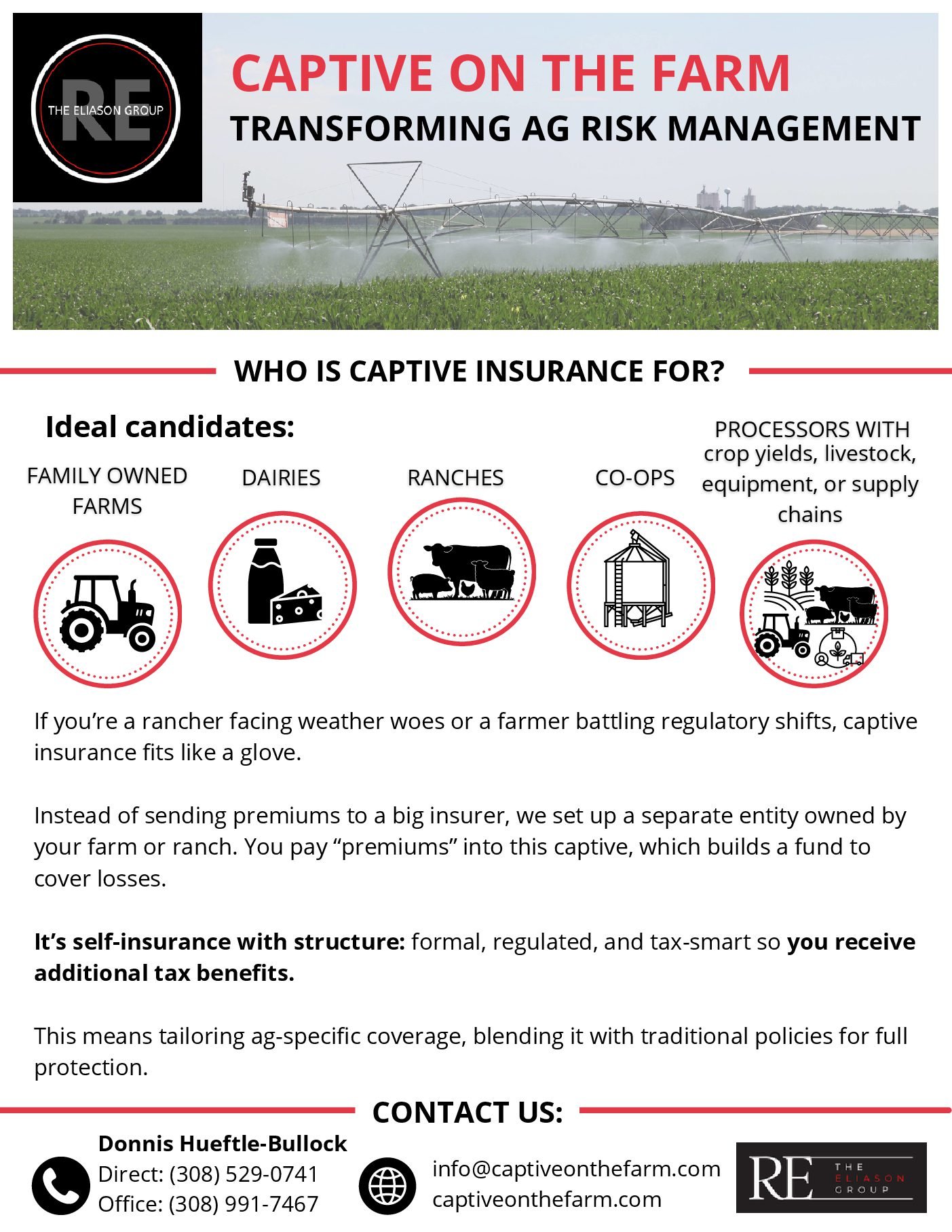
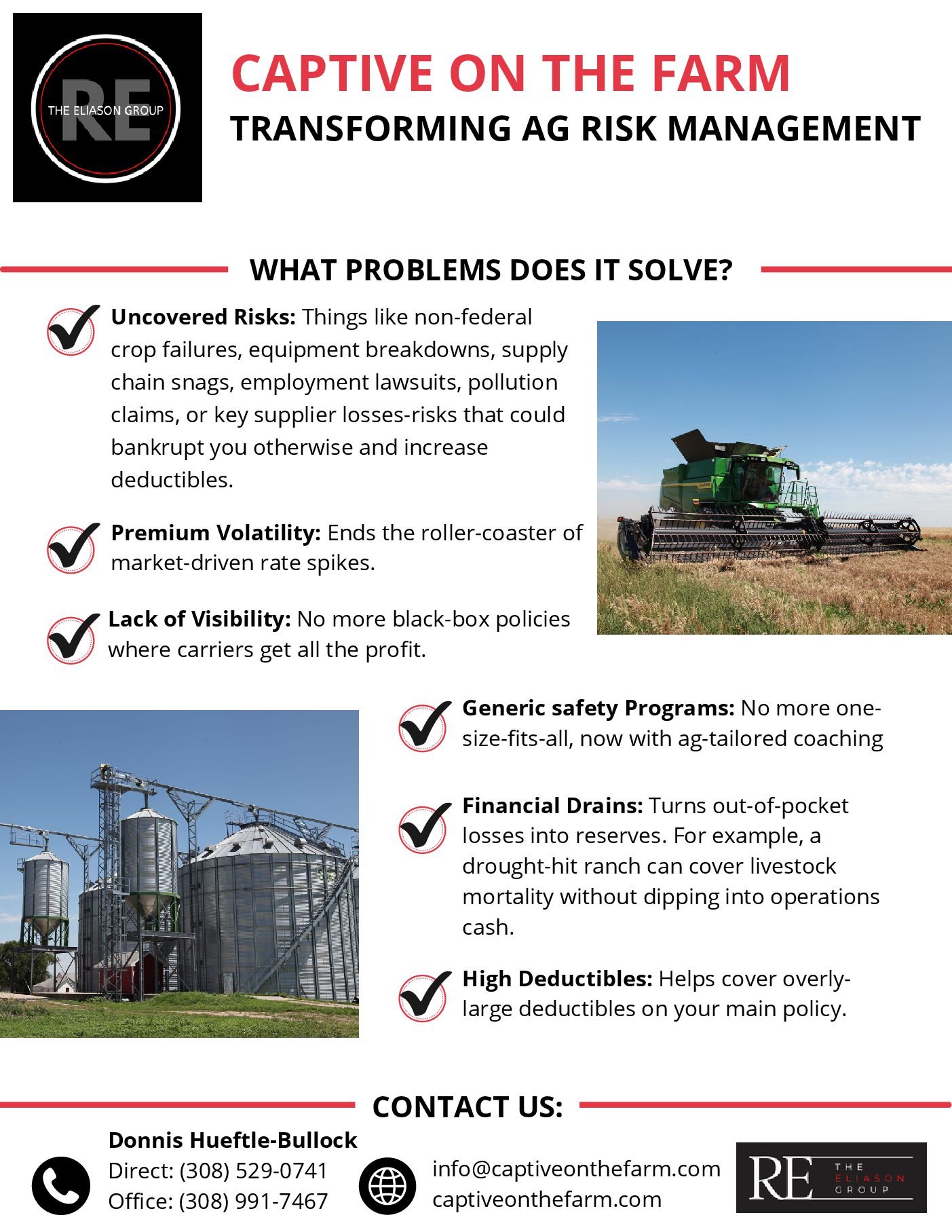
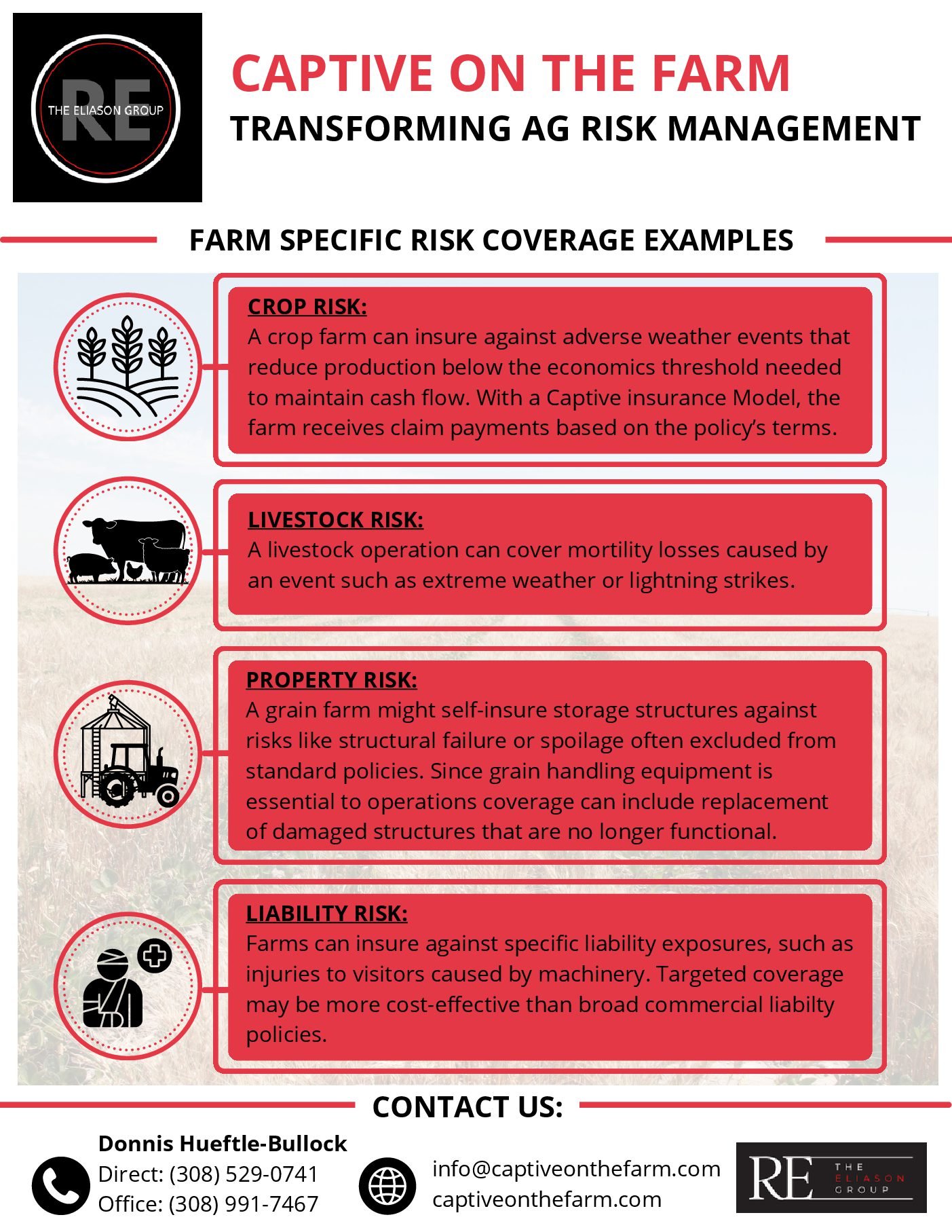
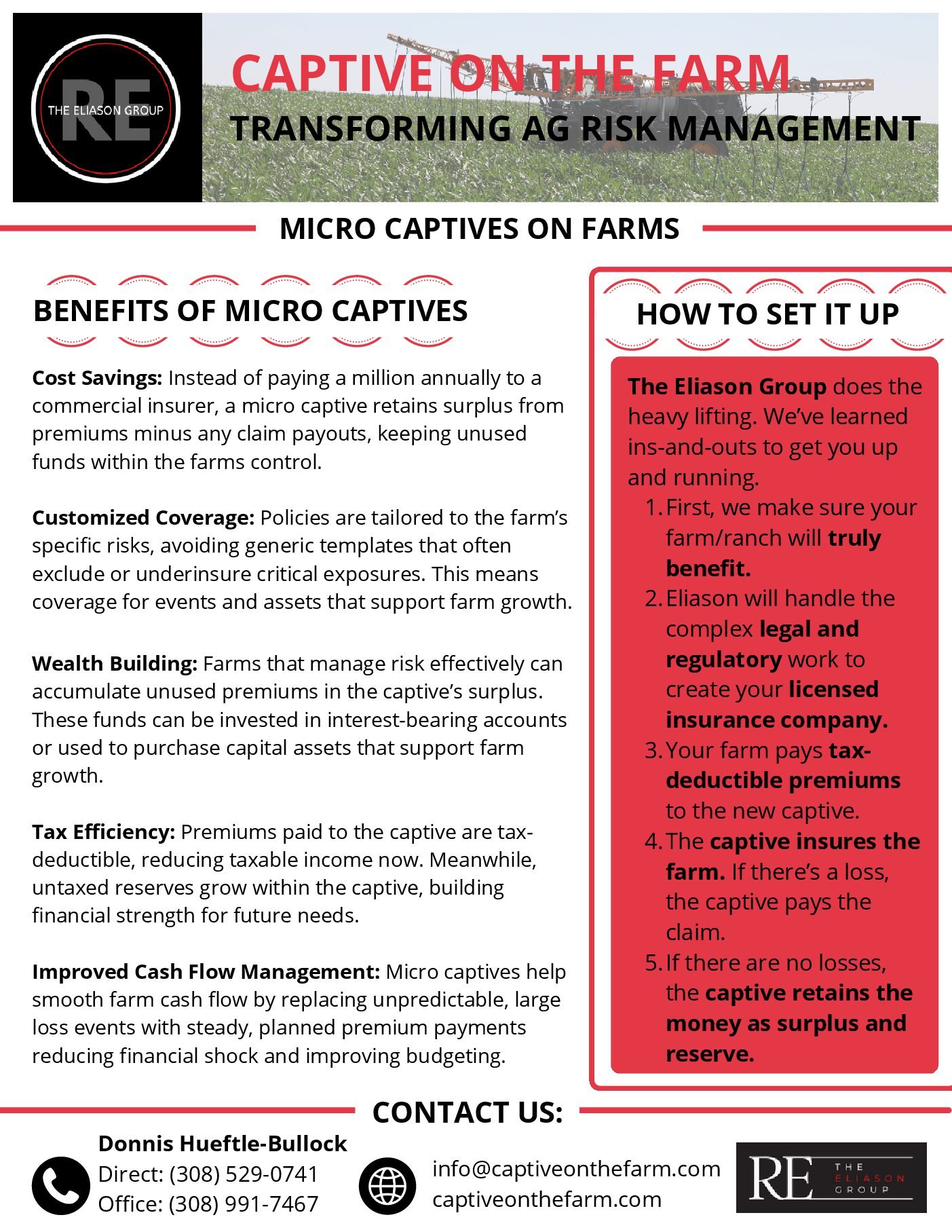
Captive on the Farm: Who is captive insurance for?Captive on the Farm: What problems does it solve?Captive on the Farm: Farm-specific risk coverage examplesCaptive on the Farm: Micro captives on farms, benefits and how to set it up

Start My Assessment

Frequently Asked Questions

Captive insurance lets farmers create their own insurance company, often a micro-captive, to cover farm-specific risks that traditional policies overlook, like weather disruptions, equipment failures, or supply chain issues. It's essentially self-insurance formalized into a professional entity, integrating with commercial coverage for a hybrid safety net. In ag, it's a game-changer for turning unpredictable losses into controlled, profitable reserves.
Mid-market ag operations with strong safety practices and predictable losses. Typical lines bundled include WC, Auto, and GL.
Your farm pays 'premiums' (deductible as business expenses) to your own captive company, which builds tax-deferred funds for claims. If no losses occur, those funds grow as profit; if claims hit, you handle them internally for speed and flexibility. It fills gaps in standard farm insurance, like high deductibles or exclusions, while encouraging safer practices to cut incidents. Programs like Captive on the Farm customize this for ag, using 831(b) for tax advantages.
IRS Code Section 831(b), from 1986, lets small captives (micro-captives) elect to be taxed only on investment income, not underwriting profits up to the cap—ideal for farmers setting aside tax-deferred dollars for uninsured risks like lawsuits or data breaches. Sites like 831b.com administer these, while Captive on the Farm applies them specifically to ag for hybrid self-insurance plans.
The group spreads risk across members and reinsurance responds above the captive layer. Long-term, performance and safety improvements matter most.
If underwriting results and investments outperform the plan after paid and IBNR losses, surplus may be distributed to members per the captive’s rules.
Captive insurance is essentially self-insurance on steroids, where your farm creates and owns a licensed entity to retain and manage risks internally. For agriculture, You self-fund gaps in crop, property, or liability coverage, but with formal structure for tax benefits and compliance.
Yes—captives are unbundled. You can use best-in-class claims, loss control, and actuarial partners aligned to your goals.
After feasibility and underwriting, many groups can onboard at renewal. Allow time for capitalization and collateral arrangements.